How to Sell Your Bay Area Home Fast: The Ultimate Seller's Guide

When looking to accelerate the sale of your San Francisco Bay Area property, sellers generally choose from three distinct avenues: taking a rapid cash offer (closing in 1 to 3 weeks) at a notable discount, working with an iBuyer (closing in 2 to 8 weeks), or partnering with an expert real estate agent to secure market value in under a month. Given that the average time on the market for San Francisco detached homes was merely 13 days in August 2026, a strategically priced and aggressively marketed property can sell much quicker than anticipated—without requiring you to sacrifice your hard-earned equity to an investor.
This comprehensive guide explores how to weigh these options, the specific home preparations that actually yield results, and the mandatory California legal disclosures you must complete regardless of how you sell. Understanding these elements ensures you treat your property launch as a holistic strategy rather than an afterthought, ultimately maximizing your final payout.
Key Takeaways for Selling Your Bay Area House Quickly
- Three Primary Avenues: Direct cash purchases are the fastest but eat into your profits. Traditional agent listings protect your home's equity and routinely close in under 30 days across many local neighborhoods.
- The Importance of Pricing: Listings that stagnate past the 30-day mark often close at a 2.5% deficit to the asking price. Accurate initial pricing prevents the need for costly reductions.
- Strategic Preparation: Allocating 1% to 3% of your target sale price toward deep cleaning, staging, painting, and high-end media typically generates the best return on investment.
- Mandatory Legal Paperwork: "As-is" sales do not exempt you from providing California's Transfer Disclosure Statement, Natural Hazard Disclosures, or San Francisco's specific 3R Report.
- Aggressive Marketing: Launching with an exclusive property site, professional imagery, and targeted digital ads creates immediate buyer urgency during the vital first week.
- Proactive Disclosures: Set aside 7 to 10 days to compile your property's disclosure packet before going live to prevent bottlenecks at the closing table.
Compare Your Options to Sell a House Fast in the Bay Area
Selecting the best route depends entirely on your target timeline, the current state of your property, and the amount of money you are willing to forfeit for convenience. Each approach has unique financial implications.
Selling to Local Cash Home Buyers in San Francisco
Local real estate investors purchase homes completely "as-is," allowing you to bypass staging, open houses, and cosmetic fixes. Closings can happen in as little as a week. However, this convenience comes at a steep premium: Bay Area cash offers generally range from 50% to 70% of the home's after-repair value (ARV) if there are major issues, or up to 85% for homes in decent shape. This makes sense for inherited properties, urgent relocations, or homes requiring massive structural overhauls, but the financial hit is rarely worth it for standard sales.
Using an iBuyer (Opendoor Bay Area)
As of 2026, Opendoor remains the prominent iBuyer in the Bay Area. They usually generate an initial offer within a day and allow you to select a closing date between 14 and 60 days out. While this is highly convenient, sellers must look closely at the net proceeds. iBuyers typically deduct a 5% to 6% service fee, estimated repair costs, and 1% to 3% in standard closing costs. On a $1.85 million property in San Francisco, these deductions can easily strip away over $150,000. Additionally, properties generally need to be built post-1940 and valued between $400,000 and $2.5 million to qualify.
Listing with a Top Local Real Estate Agent
With San Francisco single-family homes averaging 13 days on the market (and condos at 19 days) in August 2026, a traditional agent listing is incredibly efficient. A property that is prepared and marketed correctly can easily secure a buyer within three weeks. This method preserves your equity, often yielding 5% to 10% more net profit compared to wholesale cash offers—translating to roughly $50,000 to $100,000 per million dollars of value. This is the optimal path if your home is in fair condition and you can commit a small budget to pre-listing preparations.
Selling Route | Estimated Timeframe | Financial Outcome | Ideal Candidate |
Cash Investor | 7 to 14 days | 50% to 85% of ARV | Inherited properties, severe disrepair, sub-30-day deadlines |
iBuyer (e.g., Opendoor) | 14 to 60 days | Market value minus roughly 7-10% in fees | Sellers prioritizing convenience with qualifying homes |
Agent-Led Listing | 13 to 30 days | Full market value (or higher) | Sellers wanting maximum profit with a home in decent shape |
Pricing Strategies to Sell Your San Francisco Home Quickly
In the Bay Area real estate market, your timeline is heavily dictated by your list price. Homes that linger for more than a month suffer from growing buyer skepticism and routinely sell for roughly 2.5% under the asking price. It is vastly more profitable to price accurately on day one than to chase the market down with price cuts.
A proven tactic is to list your home 1% to 3% below the most recent, comparable neighborhood sale. Rather than setting a sky-high price and waiting for a single buyer to negotiate, this slight underpricing strategy often ignites bidding wars. Multiple offers not only accelerate your timeline but frequently drive the final sale price higher than your original target.
Before entertaining any offers—especially direct cash bids—you must obtain a Comparative Market Analysis (CMA) from an experienced local agent. This document evaluates active competitors, recent sales within a half-mile radius, and neighborhood absorption rates, providing you with an objective baseline to judge whether an investor's offer is fair or exploitative.
High-ROI Pre-Listing Prep & Staging for Bay Area Homes
You do not need to gut your kitchen to secure a fast sale. The most lucrative improvements are often the simplest. Removing personal items, deep cleaning, neutralizing odors, and applying fresh, neutral paint can return three to ten times their initial cost.
Extensive renovations like bathroom overhauls rarely pay off in a quick-sale scenario, often returning just 70% to 130% of their cost while delaying your timeline. Instead, swap out outdated cabinet pulls, update light fixtures, and apply fresh caulking. Crucially, you must fix any active safety hazards—such as electrical issues, water leaks, or unstrapped water heaters—as California law requires the disclosure of known defects.
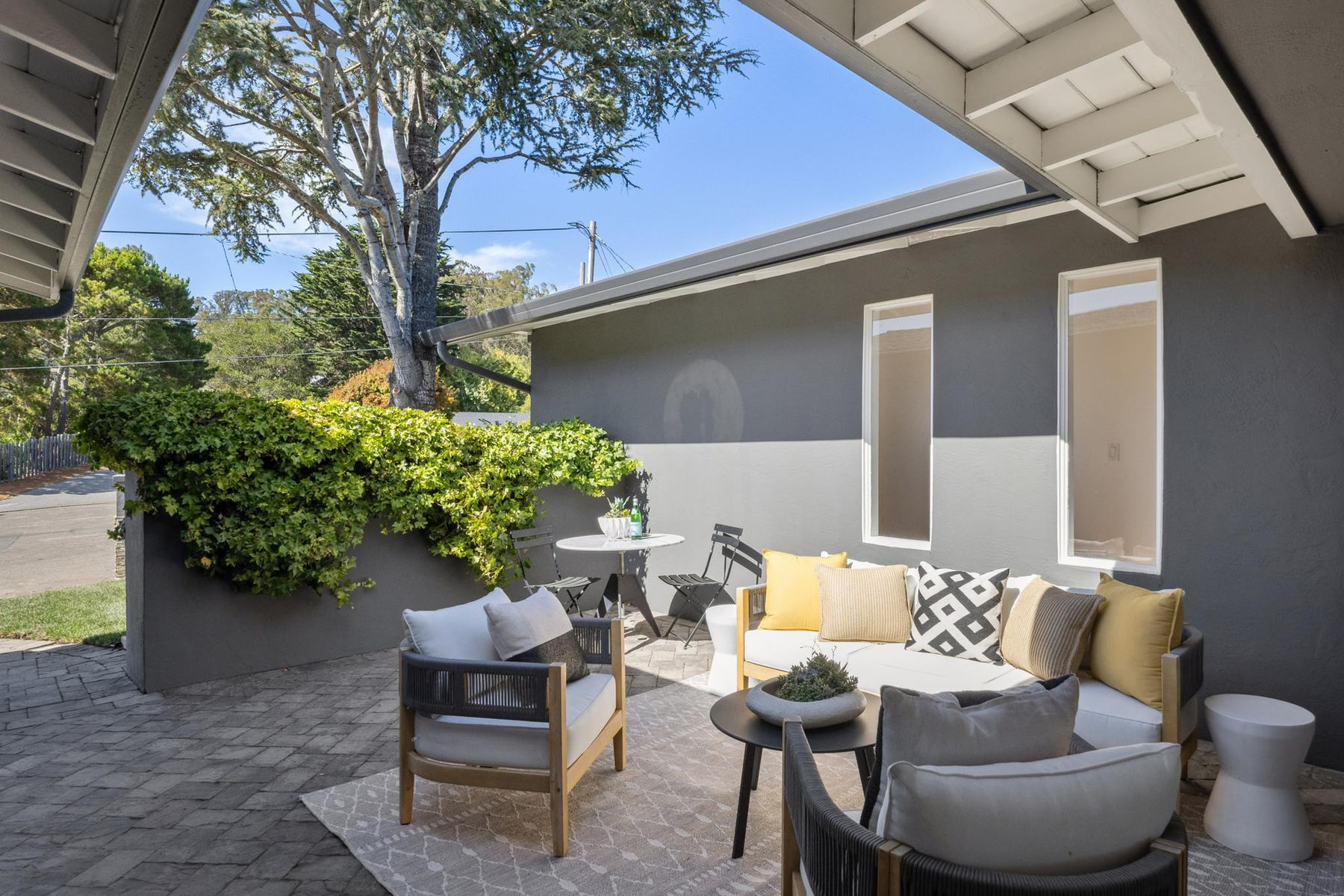
Finally, professional staging and high-end photography are mandatory for a fast, top-dollar sale. Unstaged homes sit longer, whereas a modest $3,000 to $15,000 staging investment transforms how buyers perceive the space, easily paying for itself in the final contract price. Set aside 1% to 3% of your anticipated sale price to cover cleaning, staging, paint, and media.
Fast-Track Your Sale with Premium Real Estate Marketing
Simply placing a home on the Multiple Listing Service (MLS) is no longer enough. The secret to a fast Bay Area sale is compressing all buyer interest into a concentrated window of time. This requires a synchronized launch featuring a bespoke property website, captivating property descriptions, and widespread digital syndication during week one.
The Jenn Pfeiffer Team excels at this by creating dedicated property portals complete with floor plans, high-resolution imagery, and neighborhood guides. Simultaneously, they execute hyper-targeted social media advertising across platforms like Instagram, LinkedIn, and Facebook, capturing the attention of passive buyers, tech relocators, and locals looking to upgrade. This concentrated exposure maximizes foot traffic and fosters the competitive environment needed for a rapid sale.
Mandatory California Real Estate Disclosures for a Fast Sale
Selling your property to an investor or listing it "as-is" does not legally absolve you from California's stringent disclosure requirements. Sellers are mandated to provide a Transfer Disclosure Statement (TDS), a Natural Hazard Disclosure (NHD), proof of working carbon monoxide and smoke detectors, and lead-based paint warnings for properties built prior to 1978.
San Francisco properties face even more hurdles, including the Department of Building Inspection's 3R Report, seismic retrofit compliance, sewer-lateral certifications, and complex rent-control disclosures if the property ever housed tenants.
Do not wait for a buyer to submit an offer before gathering these documents. Begin assembling your disclosure packet 7 to 10 days before your listing goes live. Having a complete, attorney-reviewed package ready on day one prevents frantic, last-minute delays and ensures a smooth escrow process.
Choosing the Best Way to Sell Your Bay Area Property
If speed is your absolute only concern and you are willing to leave money on the table, a cash investor is a viable choice. If you want a balance of convenience and timeline, an iBuyer might fit the bill. However, if you have three to six weeks and want to walk away with the absolute most money possible, a fully marketed, agent-led listing is the clear winner.
For personalized guidance on navigating your San Francisco Bay Area home sale, The Jenn Pfeiffer Team provides complimentary, zero-pressure listing consultations and thorough market analyses. Before signing any contracts or investing in renovations, reach out to secure absolute clarity on your property's true potential.
Frequently Asked Questions About Selling Fast in the Bay Area
Is it advisable to skip staging to save money and time?
No. Bypassing professional staging generally increases your days on market and depresses the final offer. The relatively small upfront cost of staging consistently yields higher net proceeds, making it a highly profitable investment rather than an expense.
How much should I budget for pre-listing preparations?
A safe estimate is 1% to 3% of your target sale price. Basic tasks like deep cleaning and decluttering cost between $500 and $3,000, while full-service staging ranges from $3,000 to $15,000, depending on the square footage and luxury tier of the home.
What are the standard criteria for an Opendoor iBuyer offer?
In the Bay Area, Opendoor typically targets properties constructed after 1940 with valuations falling between $400,000 and $2.5 million. They offer closing flexibility between two weeks and two months.
What is the financial difference between an iBuyer/cash offer and a traditional agent listing?
Cash investors typically offer 50% to 85% of your home's repaired value. iBuyers offer closer to market value but deduct 7% to 10% in various service and closing fees. Conversely, a well-marketed agent listing typically nets sellers 5% to 10% more profit overall, easily justifying the traditional 30-day timeline.